Kadri Vihvelin on free will

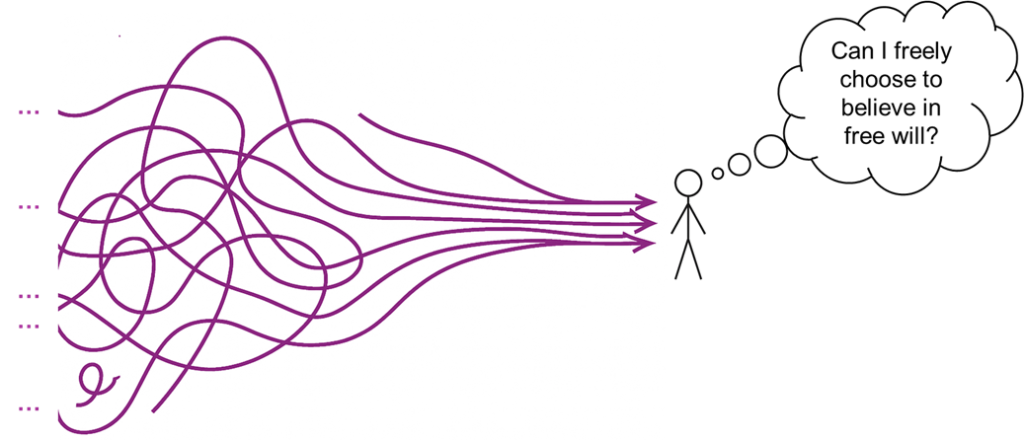
Suppose determinism is true. This would mean that every decision we make at any given moment follows inevitably from the laws of physics, biology, and chemistry, etc. (from here on laws of nature for short), as well as the entire chain of prior events stretching back to the beginning of the universe. Many of these laws may be neither known nor knowable. According to a widely accepted definition, free will requires the ability to have chosen otherwise. But determinism appears to rule out any possibility of having made a different choice than the one we actually did.

Philosopher Kadri Vihvelin (2004) offers a thought-provoking analysis of how free will might still be possible under determinism, a flavour of compatibilism. This post is a summary of her argument.

Before we begin, why on earth would we even entertain the idea of determinism? At first glance, the existence of randomness seems to challenge it. However, what appears random may emerge from combinations of an unimaginably vast number of deterministic causes. Pseudorandom number generators, for example, are relatively simple algorithms which produce sequences that appear random but are entirely deterministic. Algorithms are small. The universe is big. “You just won’t believe how vastly, hugely, mind-bogglingly big it is,” said Douglas Adams. The universe could be a really complicated pseudorandom generator.

Quantum mechanics also seems to challenge determinism. When measuring a quantum particle (like a photon) in superposition, the outcome follows a probability distribution (I previously tried to explain this with a toy example). This indeterminacy has led many to interpret quantum mechanics as fundamentally probabilistic. Yet some physicists defend superdeterminism, an apparently controversial idea suggesting that even quantum measurements are predetermined, including the choices physicists make when selecting measurement settings in experiments (Hossenfelder & Palmer, 2020).

That’s just a sketch; however, hopefully enough to suggest that determinism isn’t too absurd to read on.

Choosing means, more specifically, making choices on the basis of reasons. Libet and others have conducted numerous studies on the neuroscience of choosing, which may challenge the role of conscious choice (see Haggard, 2024, for discussion). However, we are more than what we are conscious of. For example, we retrieve memories without knowing how our brains searched for them, and we move through the world without being aware of how our nervous system coordinates muscle movements. I’m happy to accept a choice as mine, even if a bunch of subconscious processes did the choosing, so long as it was made on the basis of reasons – even ones I’m unaware of.

At the heart of Vihvelin’s position is the idea that our choices stem from bundles of dispositions (tendencies, causal powers, or capacities) much like the ability to speak French, drive, dance, or sing. Crucially, dispositions don’t disappear simply because we haven’t exercised them. If we chose to run at a particular moment, that doesn’t mean we lacked the disposition to walk, crawl, skip, or dance. Likewise, if we spoke French at some point, it doesn’t follow that we couldn’t have spoken English (assuming we know both languages). Or consider something simpler: a working sprinkler system. It has the dispositions required to flood a room – detecting heat or smoke (reasons) and releasing water (making a choice) – even if it never activates during its lifetime.
Free will, according to Vihvelin’s compatibilist account, is the ability to make choices on the basis of reasons and to have this ability is to have a bundle of dispositions. She offers the following menu of dispositions that are likely needed (p. 439):

“[T]he disposition to form and revise beliefs in response to evidence and argument; the disposition to form intentions (choose, try to act) in response to her desires […] and beliefs about how to achieve those desires; the disposition to engage in practical reasoning in response to her intention to make a rational (defensible, justifiable) decision about what to do and her belief that by engaging in practical reasoning she will succeed in making such a decision.”

So, given determinism (laws of nature, history of the universe) and a choice we made, we had a bundle of dispositions that would have enabled us to choose otherwise – free will.

Vihvelin spells out the argument as follows (p. 432):

  1. Dispositions are compatible with determinism.
  2. Abilities are dispositions or bundles of dispositions.
  3. Therefore, the existence of abilities is compatible with determinism.
  4. Free will is the ability to choose on the basis of reasons (I’d add, including subconscious reasons and choosing), and we have this ability by having a bundle of dispositions.
  5. Therefore, free will (the ability to choose on the basis of reasons) is compatible with determinism.
  6. Abilities (like other dispositions) typically continue to exist even when they are not being exercised or manifested.
  7. Therefore, determinism is compatible with the existence of unexercised abilities, including the ability to choose on the basis of reasons.
  8. Abilities are like dispositions with respect to the entailment from the claim that a person has the ability (disposition) to do X to the claim that the person can do X.
  9. Therefore, determinism is compatible with the truth of the claim that persons can choose and do other than what they actually choose and do.

I think that this argument also relates to what Holland (1986, p. 947) called the fundamental problem of causal inference. When evaluating a social programme, we observe the outcomes (like mental health or education) of those who take part, but we can’t observe what someone’s outcome would have been without the programme: the counterfactual outcome. We can infer their counterfactual outcomes (on average) from a well-constructed comparison group, or we can make a reasoned argument based on a theory of what they might have been able to do without the programme, including a theory of their bundles of dispositions.

It’s a similar issue with free will. When someone chooses to do something at some point in time, we can’t observe what their outcome would have been had they chosen to do differently. But, according to Vihvelin’s analysis, if they had free will, they had a bundle of dispositions that would have enabled them to choose otherwise. We can infer how they could have chosen, perhaps by finding people like them who did choose differently, or by making a counterfactual argument on the basis of what their bundle of dispositions are.

Thank you Joanna and the Philosophy Circle at NLC (14 November 2025) for helpful discussion!

References

Haggard, P. (2024). An intellectual history of the ‘Libet experiment’: Embedding the neuroscience of free will. Proceedings of the Paris Institute for Advanced Study, 1.

Holland, P. W. (1986). Statistics and causal inference. Journal of the American Statistical Association, 81(396), 945–960.

Hossenfelder, S., & Palmer, T. (2020). Rethinking Superdeterminism. Frontiers in Physics, 8, 139.

Vihvelin, K. (2004). Free Will Demystified: A Dispositional Account. Philosophical Topics, 32, 427–450.
DAGs are not necessarily associated with causation

The bad old days: an association was found between X and Y; however, correlation does not imply causation. Check out this long list of covariates and how they were adjusted in a big ol’ regression model.

These enlightened times: X causes Y; here’s a causal DAG, which you critically appraise by determining which important confounding variables are absent; whether something that’s currently a confounder should, e.g., really be a mediator or vice versa; and whether the regression, weighting, or matching model reflects what you think is the true causal structure, having critically appraised the authors’ DAG.

The main benefit of causal DAGs is not in identifying confounders but rather not mistakenly conditioning on the wrong things. The hard work of non-experimental causal inference is in the topic theory. X causes Y in the DAG does not imply causation in the world without a solid tested theory.

ITT ATT

Intention to treat (ITT) analyses code a participant’s group according to the condition they were assigned to, regardless of whether they engaged with that condition or, e.g., swapped to another. Sometimes the average treatment effect on the treated (ATT) estimand is misunderstood to mean analysing people according to what intervention they actually engaged with. But the two concepts are independent of each other and depend on how the potential outcomes are defined.

For example, let Yᵢ(ai) denote the potential outcome for participant, i, were they to be assigned to the intervention, and Yᵢ(ac) denote the potential outcome were they to be assigned to some comparison condition. Let Gᵢ denote the group they were assigned to (note, not necessarily what they engaged with!). The following estimand is an ITT ATT:

E[Yᵢ(ai) – Yᵢ(ac) | Gᵢ = ai]

Hearing impairment and incident heart failure

Another potential example for a DAG or two. Huang et al. (2025) found an association between hearing impairment and subsequent heart failure, which they attributed to a common cause of systemic vascular disorders. I don’t know anything about either topic, but it sounds plausible – more so than, e.g., hearing loss causing heart failure. They also found that whether people wore a hearing aid did not moderate this association – which again makes sense, though it was unclear what the authors expected:

“Of note, both the participants who used hearing aids and those with poor hearing status had a similarly significant increase in the risk of incident HF, suggesting that while hearing aids can improve auditory function, they may not address the underlying vascular issues that contribute to the risk of HF.”

I think it’s missing an “unsurprisingly”, but again don’t know the topic.

But then the mediation test comes along and suggests that the association between hearing loss and heart failure is mediated by psychological factors such as stress. Now how to get that in a DAG with the common cause model.

Here’s the relevant paragraph:

“Second, we found that the positive association between poor hearing status and incident HF was significantly mediated by psychological factors. Because hearing problems can lead to difficulties in speech comprehension and poor engagement in social activities, people with hearing impairment are more likely to experience social isolation, psychological distress, anxiety and depression than people without hearing impairment. These psychological factors may increase the activity of the sympathetic nervous system and the hypothalamic-pituitary-adrenal axis, and enhance inflammation and oxidative stress, thereby accelerating atherosclerosis, increasing peripheral stress, and promoting the development of cardiac remodelling in the pre-HF period, thus significantly increasing the risk of HF.”

References

Huang, Y., Zhang, Y., Zhang, Y., Xiang, H., Ye, Z., Yang, S., Gan, X., Wu, Y., Zhang, Y., & Qin, X. (2025). Hearing impairment, psychological distress, and incident heart failure: A prospective cohort study. Heart, heartjnl-2024-325394.

Your control group can be sensible

There’s nothing in theories of experiments requiring that researchers use a ridiculous control group. An example of such a ridiculous (and unethical) control would include randomising people who are living in abject poverty either to a regular sufficient social security payment or leaving them in poverty. Hmmm, what group will have a better outcome…?

The first example Rubin gave in his classic “Estimating causal effects of treatments in randomized and nonrandomized studies” (Rubin, 1974, p. 689) had the following two groups:

“… we will restrict discussion to the very simple study consisting of 2N units (e.g., subjects), half having been exposed to an experimental (E) treatment (e.g., a compensatory reading program) and the other half having been exposed to a control (C) treatment (e.g., a regular reading program).”

Lind’s (1753) study of scurvy treatments compared six treatments, including cider, vinegar, and sea water, as well as the oranges and lemons. Potentially unclear what the theoretical rationale was for all of those, so not ideal I’ll admit.

It’s pretty common now to use “business as usual”, “treatment as usual”, “teaching as usual”, etc., controls and to avoid waitlist controls. But this is not a new idea.

Additionally, Rubin didn’t use Y(1) and Y(0) for the two potential outcomes, but Y(E) and Y(C). It’s a very subtle difference; however, I wonder if ditching the zero helps people’s understanding. My preference would be something even closer to the names of the actual programs, e.g., if we are evaluating whether the Acme Compensatory Reading Programme is better than regular reading, Y(Acme) and Y(Regular) to emphasise the contrast. (Also now we would use “participants” rather than “subjects”.)

References

Rubin, D. B. (1974). Estimating causal effects of treatments in randomized and nonrandomized studies. Journal of Educational Psychology, 66(5), 688–701.

Lind, J. (1753). A treatise of the scurvy. In three parts. Containing an inquiry into the nature, causes and cure, of that disease. Together with a critical and chronological view of what has been published on the subject. Edinburgh: Printed by Sands, Murray and Cochran for A. Kincaid and A. Donaldson.


“Causal chambers as a real-world physical testbed for AI methodology”

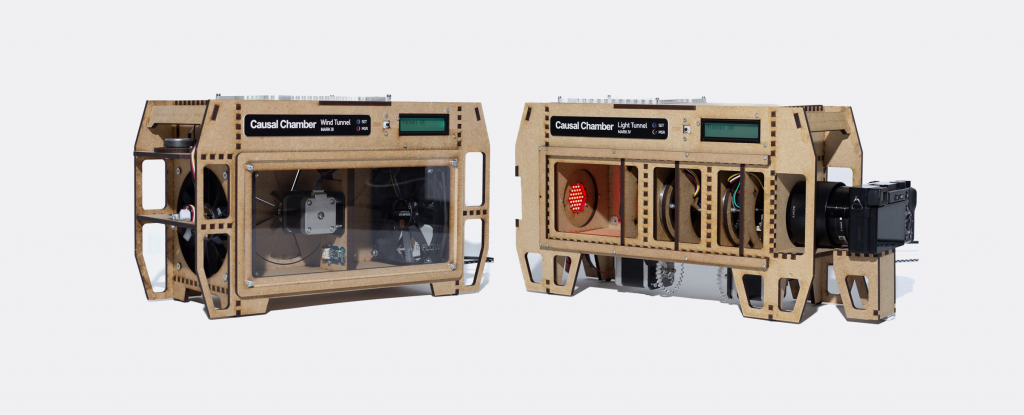
Fun research providing an alternative to computer-based data simulation for developing and testing machine learning algorithms: Gamella, Peters, and Bühlmann (2025) built two physical devices (“causal chambers”) consisting of a light tunnel and wind tunnel. These devices were designed so that the underlying physical systems are well understood, which means that the true causal models are known. The systems are automatically controlled, allowing large quantities of data to be produced. The authors provided case studies for out-of-distribution generalization, change point detection, independent component analysis (ICA) and symbolic regression.

They have a website and GitHub repo of datasets from the case studies.

References

Gamella, J. L., Peters, J., & Bühlmann, P. (2025). Causal chambers as a real-world physical testbed for AI methodology. Nature Machine Intelligence. Online first.

Time and potential outcomes

“For our purposes, the same physical object or person at a different time is a different unit.” (Guido Imbens and Donald Rubin, 2015, p. 4)

“I guess I wont send that note now, for the mind is such a new place, last night feels obsolete.” (Emily Dickinson, 1870)

References

Dickinson, E. (1870). Letter to Elizabeth Holland.

Imbens, G. W., & Rubin, D. B. (2015). Causal Inference for Statistics, Social, and Biomedical Sciences: An Introduction. Cambridge University Press.

Chocolate and diabetes

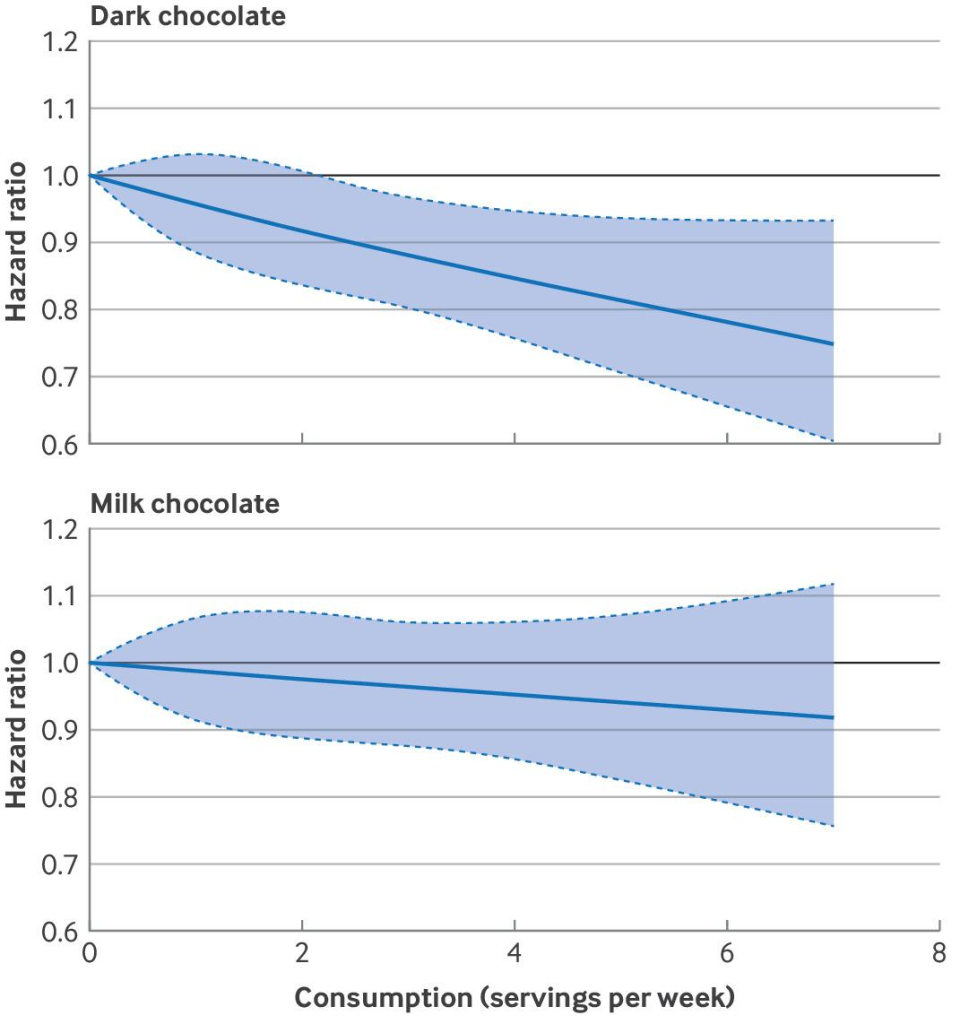
Increased consumption of dark, but not milk, chocolate was “associated with” lower risk of type 2 diabetes (Lin, et al., 2024). Refresh your teaching examples for causal inference using non-experimental data 🤓

Liu, B., Zong, G., Zhu, L., Hu, Y., Manson, J. E., Wang, M., Rimm, E. B., Hu, F. B., & Sun, Q. (2024). Chocolate intake and risk of type 2 diabetes: prospective cohort studies. BMJ, e078386.

The causal inference task view on CRAN

“Causal inference can be seen as a subfield of statistical analysis. It is used in various fields such as econometrics, epidemiology, educational sciences, etc. With causal inference one addresses questions about effects of a treatment, intervention, or policy on some target over a given sample or population. Under certain identifiability and model assumptions, causal inference can be carried out by fitting simple regression models or combining several regression models in a specific way as will be sketched out later. For observational data, additional untestable assumptions have to be made to (non-parametrically) identify causal effects.”

The CRAN task view is over here.