Counterfactual isn’t a synonym for control group. Here’s a brief Open Encyclopedia of Cognitive Science entry on counterfactual thinking, which argues that it is “extremely common and profoundly useful in ordinary life.” Whether or not you believe that your impact evaluation is counterfactual, there’s a good chance that your participants are using counterfactual thinking to answer your questions.
Brigard, F. D. (2025). Counterfactual Thinking. In Open Encyclopedia of Cognitive Science. MIT Press.
I reread Mayne’s (2019) on contribution analysis today and see he also allows a “what works for whom”:
“… a more interesting and important contribution claim is around this evaluation question: How and why has the intervention (or component) made a difference, or not, and for whom?” (p. 174-5).
He also allows ToCs to describe contexts: “Using nested ToCs to unpack a complex intervention and its context has worked well in numerous situations…” (p. 178).
Mayne (2012) put context in the ToCs too: “External factors – context and rival explanations – influencing the intervention are assessed and are either shown not to have made a significant contribution or, if they did, their relative contribution is recognized.” (p. 273)
So there’s another theory-based brand with a “what works for whom in what context”, plus it uses generative causation 🙃
Of course I jest. Any approach can use generative causation, whether RCT or qualitative impact evaluation. Any approach can explore moderators of impact.
References
Mayne, J. (2012). Contribution analysis: Coming of age? Evaluation, 18(3), 270–280.
Mayne, J. (2019). Revisiting contribution analysis. Canadian Journal of Program Evaluation, 34(2), 171–191.
Thomas Aston (2026) has written a really interesting discussion of debates about what counts as realist evaluation and whether it is a unique kind of evaluation.
As I’ve written before (and Aston cites), I think theorising contexts, mechanisms, and outcomes (CMOs) is important, as is recognising a gap between theory, phenomena, and evidence. However, as Pawson (2024, p. 42) notes: “All [!] scientific investigation utilises explanations relating mechanisms and contexts to empirical patterns.” It’s science-as-usual. Pawson and Tilley know this – they acknowledge and cite earlier work. For example Pawson and Tilley (1997, p. 10) cite Palmer (1975, p. 150):
“Rather than ask, ‘What works for offenders as a whole?’ we must increasingly ask ‘Which methods work best for which types of offenders, and under what conditions or in what types of setting?'”
The link with science-as-usual is clear in Pawson and Tilley (2001, p. 324):
“We have argued that good evaluation is good social science. For us, this embraces the gallant aims of precision in articulation of theory, rigor in empirical testing, confederation in lines of inquiry, and cumulation in the body of findings. The ‘realist movement,’ of which we are a part, is often considered the brash upstart of the evaluation schools. In fact, it depends on these rather venerable ideas. The future, for us, thus lies in keeping faith with some of the grand old principles of social science and in not forgetting the hard-won lessons of the old studies.”
Evaluation method(ology) debates remind me of debates about psychological therapy brands, like CBT, psychodynamic, or humanistic approaches. Mick Power (2010) is an example therapist-academic who had a go at dismantling the brands, and pulled out graded exposure, transference, and challenging dysfunctional assumptions as example techniques that are used across a range of approaches. Others have done similar, e.g., the behavioural change technique taxonomy (Michie et al., 2013) extracts a long menu of approaches that can be combined to develop a programme.
I think evaluation would make faster progress if we routinely dismantled the big evaluation brands and asked of an apparently new and unique approach:
Is it really unique?
Who else has done similar?
What is the approach an instance of?
How could the approach be used in another type of evaluation?
How could a technique be combined with another?
Westhorp and Feeny (2024) used this style of reasoning for realist evaluation, and showed how regression models with interaction terms can be used to test CMOs. Baumgartner and Falk (2023) explore regression-based alternatives to the Quine-McCluskey logical minimisation algorithm used in qualitative comparative analysis (QCA), closing the gap between QCA and statistics.
When it comes to questions of metaphysics, ask: what other approaches make the same or similar assumptions, e.g., concerning ontology and epistemology? For example, there’s a trace of the gap between mechanism and measure in questionnaire design: “operationalisation”, the process of developing a measure of, e.g., a psychological construct. This process begins with the premise that the phenomena are not directly observable. It’s psychometrics 101.
And this critical dismantling strategy applies to quantitative impact evaluation approaches too. Consider “synthetic controls” developed using the synthetic control method. They sounds unique and special; however, peek behind the curtain and they’re weighted averages, with weights estimated by balancing pre-intervention measurements of the outcome and covariates. So perhaps a comparison group developed using inverse probability of treatment weighting is also a “synthetic control”…? Maybe a t-test uses synthetic treatment and control groups, with unit weights…? Or consider entropy balancing, which, when targeting the ATT, is equivalent to inverse probability tilting (IPT; Słoczyński et al., 2025). The only difference is that entropy‑balancing weights sum to the comparison‑group sample size, whereas IPT weights sum to the intervention‑group sample size.
Build bridges between the methods and methodologies and they take up less space in your brain, making it easier to design robust evaluations and communicate clearly what you’re really setting out to do.
Palmer, T. (1975). Martinson Revisited. Journal of Research in Crime and Delinquency, 12(2), 133–152.
Power, M. J. (2010). Emotion focussed cognitive therapy. John Wiley & Sons.
Słoczyński, T., Uysal, S. D., & Wooldridge, J. M. (2025). Covariate Balancing and the Equivalence of Weighting and Doubly Robust Estimators of Average Treatment Effects. IZA Institute of Labour Economics Discussion Paper, 18147.
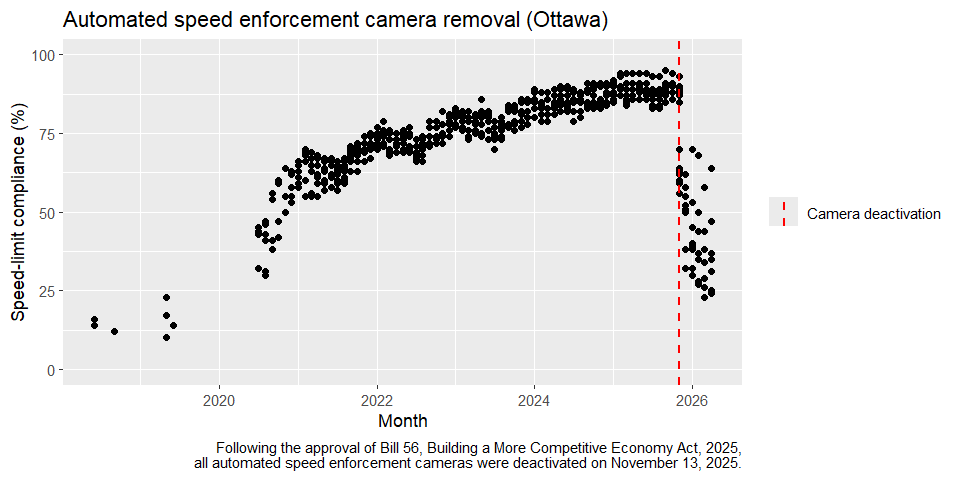
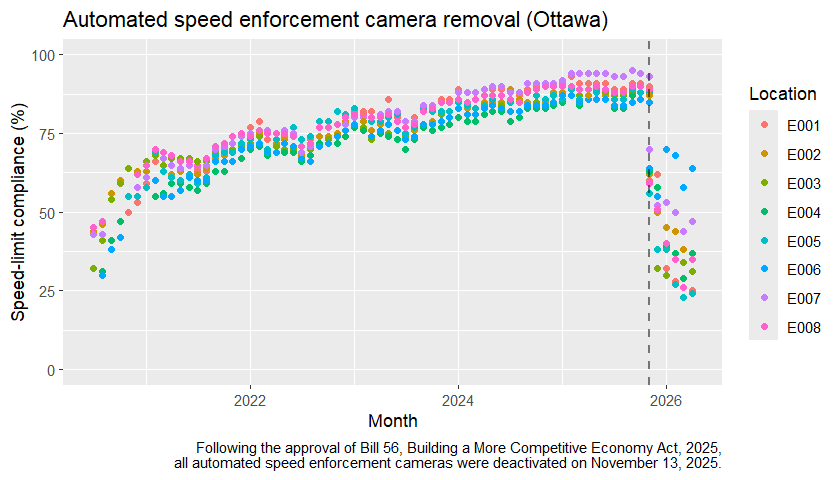
“Following the approval of Bill 56, Building a More Competitive Economy Act, 2025, all automated speed enforcement cameras were deactivated on November 13, 2025. The city has since been collecting and analyzing speed data at the original eight pilot locations to evaluate the impact of the camera removals. Monthly updates are provided for each site, including average speed, 85th percentile speed, speed-limit compliance rates, and the proportion of high-end speeders. This data is presented alongside baseline conditions prior to ASE camera installation and results observed during the enforcement period.”
Theory‑based (or driven) evaluations begin with a theory of change and then design the evaluation to test the causal mechanisms it proposes (Fitz‑Gibbon & Morris, 1975). A well‑constructed theory of change sets out how a programme’s resources are deployed to support delivery activities, and how these activities activate the causal mechanisms that generate outcomes as they evolve over time. The early – and, to my mind, more coherent – formulations of theory‑based evaluation were pluralistic, encompassing all methodological approaches (see, e.g., Chen, 2015): RCTs and quasi‑experiments alongside, for example, process tracing and qualitative comparative analysis.
Mechanisms can be defined in terms of entities and what they do to bring about change (Illari & Williamson, 2011). We can identify those entities and activities with the aid of substantive theories relevant to the policy area under investigation, and the mechanisms are described using the concepts provided by those theories (Ioannidis & Psillos, 2018). A substantive theory is particularly helpful when there is evidence for the mechanisms it proposes, rather than when it rests only on armchair speculation. However, all theories are necessarily incomplete and evolve as new evidence accumulates. Some theories are more detailed than others. Some have been more thoroughly tested than others.
Substantive theories describe mechanism at different levels of explanation. Sun et al. (2005) describe the levels as follows:
Object of analysis
Type of analysis
Elements in model
Inter-agent
Social/cultural
Collections of agents
Agents
Psychological
Individual agents
Intra-agent
Componential [I think also psychological]
Modular construction of agents
Substrates
Physiological
Biological realisation of modules
For an inter‑agent analysis, the focus is on how collections of agents (often people) interact with one another. Examples include models of crowd behaviour when a fire alarm sounds, or systemic processes that shape people’s experiences, such as racism, sexism, transphobia, and their intersections.
For an agent‑level analysis, the focus shifts to individual people. This is roughly the way we talk about individuals in everyday life, including their desires, beliefs, opportunities, and actions, for instance, spending money, talking, listening, going for a run, attending a mentoring session, or doing homework.
An intra‑agent analysis draws on concepts from psychology. This may include theories of cognitive control; for instance, why people sometimes respond automatically and at other times engage in deliberate thought, and how conflicts between competing cognitive systems are resolved. It may include theories of emotion, such as how people’s goals and their (often automatic) inferences about progress toward those goals give rise to feelings of happiness, sadness, fear, or anger. Theories of memory systems also sit here, including how information is temporarily represented in visuospatial and phonological working memory, and the capacity and processing limits of these systems.
Finally, analysis at the substrate level considers the biological processes that implement psychological‑level mechanisms or reflect the consequences of behavioural change. This is most visible in dietary interventions, where targets might include blood glucose or cholesterol levels. It can also include theories from cognitive neuroscience, such as which neural systems underpin cognitive control or memory.
I revisited the theories of change in two evaluations I worked on to see which elements from these four levels of analysis were present.
Case study 1: Basic Maths Premium
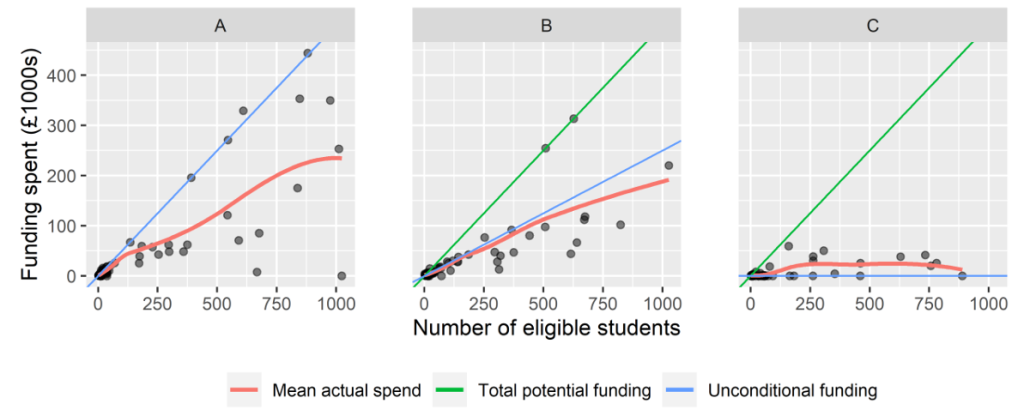
Basic Maths Premium was a Department for Education pilot that provided additional funding to post‑16 providers in disadvantaged areas to improve GCSE maths resit outcomes for students with prior attainment at grade 3 or below. It tested three funding models using an RCT: two with guaranteed elements and one based entirely on payment by results (PbR):
Model
Unconditional funding
Conditional funding
A
£500 × number of eligible students
B
£250 × number of eligible students
£250 × number of successful students
C
£500 × number successful students
The theory of change was at the agent level. For unconditional funding, the theory was straightforward: funding would enable activities expected to improve outcomes, such as more teaching hours, smaller class sizes, and greater use of technology. By contrast, the theory underpinning conditional funding was less unconvincing. Financial incentives were assumed to boost staff motivation, which would in turn enhance teaching quality, student motivation, and ultimately learning outcomes. However, for Model C in particular, it was uncertain how providers were expected to finance any additional activities, given that all funding under this model depended on student pass rates after any teaching had ended. Two quotations from heads of maths, drawn from the implementation and process evaluation (IPE), captured the issue succinctly (Scott et al., 2024):
“The fact that we’ve got this potential funding in the future that will reward us for that, that’s great, but we’ve still got to find the funds now to do what we do” (Model C – conditional £500 per passing student).
“I think [payment by results is] really unfair because you would not really know how much money you were going to get. I don’t think we would have been able to spend any additional money on that basis, so for us it wouldn’t have really worked. […] I would never have been able to employ two staff on the basis that I might get a certain amount of students through a GCSE. That would have been too much of a financial risk” (Model A – unconditional £500 per student). Also a good example of counterfactual reasoning without a comparison group.
The IPE showed that actual spend was primarily driven by the unconditional funding:
Case study 2: Stop and Think
Stop and Think is a computer‑based intervention designed to help primary pupils overcome common misconceptions in maths and science. It focuses on strengthening children’s inhibitory control: the ability to pause, reflect, and override intuitive but incorrect responses, by guiding them through short, game‑like activities that present counter-intuitive problems.
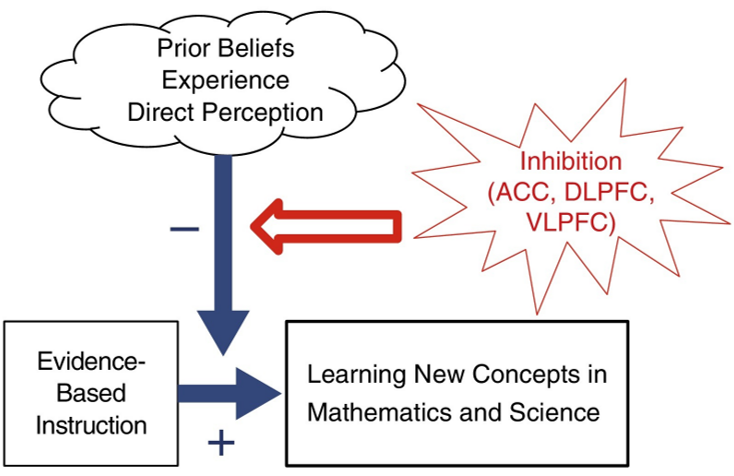
The theory underlying the programme included intra-agent and substrate levels of analysis. Briefly, the idea is that when students learn new concepts, they need to overcome intuitively obvious prior beliefs. Mareschal (2016) summarises evidence of the cognitive mechanisms involved when intuitions and new learning clash with each other, e.g., the inhibition of pre-existing beliefs involves processes implemented in the dorsal lateral prefrontal cortex (DLPFC) and the anterior cingulate cortex (ACC). Picture below (Mareschal, 2016, p. 115):
One of the tests of the theory in the RCT evaluating Stop and Think (Takala, et al., 2025) involved the construction of a measure of misconceptions driven by prior beliefs. The impact of the programme on misconceptions was then tested quantitatively using mediation analysis.
Importantly, this variable-based analysis is not the mechanism. Instead, the misconceptions measure was an indirect operationalisation of a trace of the underlying mechanism illustrated in the picture above. This distinction is summarised by Paley and Lilford (2011, pp. 956-7):
“The view […] that reality is fragmented into variables, is a straw man. No one believes it, and classification into types is something that all researchers, both quantitative and qualitative, do. Variables are a product of measurement procedures; they are not part of the structure of reality.”
Conclusions
Being explicit about the entities involved, the activities they carry out, the substantive theories that link these activities to change, and the levels of analysis being used has potential to improve the quality of theories of change. In the lead‑up to developing a new theory, it can be valuable to revisit earlier theories and identify their weaknesses, with the aim of learning from past mistakes and doing better.
A persistent challenge, however, is that evaluators are often brought into the process too late, when the theory is already fixed or the programme is underway. Feasibility and pilot studies, with an emphasis on implementation and process evaluation, offer a crucial opportunity to deepen theories of change, fail fast, and adjust course before public funding is committed to programmes with unconvincing rationales.
References
Chen, H. T. (2015). Practical program evaluation: Theory-driven evaluation and the integrated evaluation perspective (2nd edition). Sage Publications.
Fitz-Gibbon, C. T., & Morris, L. L. (1975). Theory-based evaluation. Evaluation Comment, 5(1), 1–4. Reprinted in Fitz-Gibbon, C. T., & Morris, L. L. (1996). Theory-based evaluation. Evaluation Practice, 17(2), 177–184.
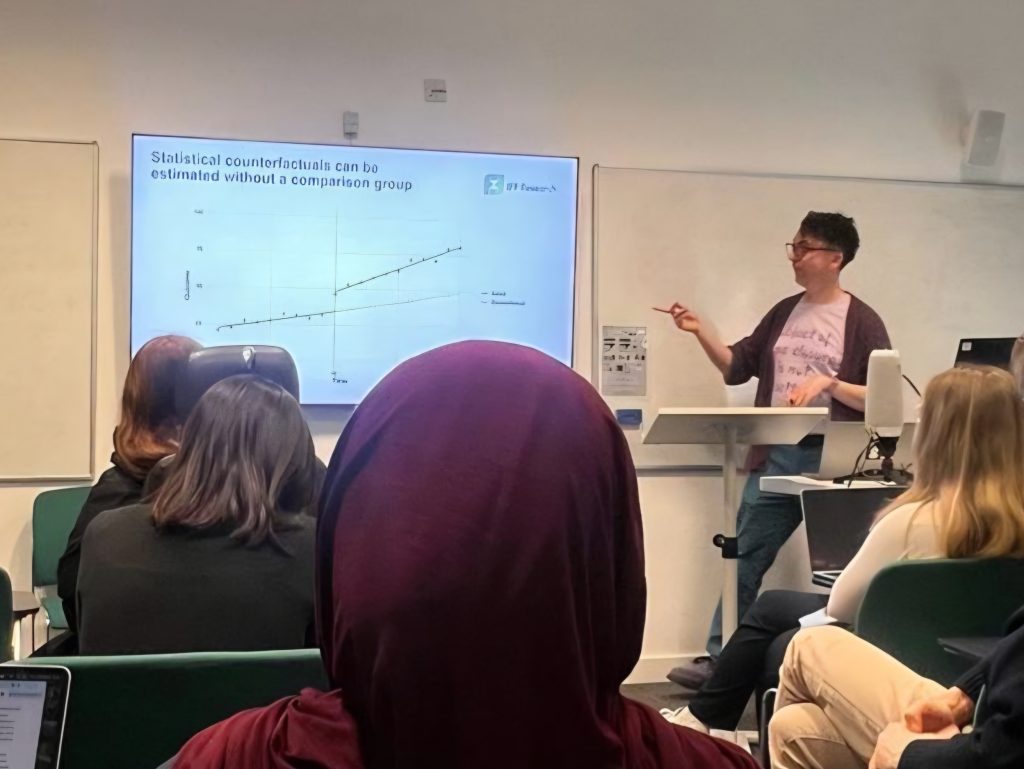
This week I gave a talk to the MPP class. Slides here. I covered the usual things, e.g., how all policy evaluation is theory-based and counterfactuals don’t need a comparison group. A few new additions:
I claimed that Realistic Evaluation, i.e., the (Pawson & Tilley, 1997) book, is an intro to scientific methods and philosophy of science, rather than introducing a distinct form of evaluation. I think this is clearest to see in Pawson (2024), and it’s one of the most muddled sections of the Magenta Book.
The importance of theory for interpreting the meaning of covariates as well as merely selecting them. This is particularly important for intersectional understandings of selection into programmes, e.g., you need a theory to work out why, e.g., some combinations of gender and ethnicity, are more likely to be referred to a targetted programme. Is it driven by gender and/or racial stereotypes at time of selection, or broader societal discrimination before selection, for example?
An example from the Green Book (para 4.17) of a type of counterfactual reasoning, used when appraising different ways to realise a policy. I think the reasoning behind “deadweight” and “additionality” outcomes may use future less vivid conditionals. Still reading.
Policy evaluation involves speculating about what might be going on – a creative process – based on what we currently (think we) know, and then working out what evidence we would expect to see if we were correct or if plausible alternative theories were true. That logic is explicit in process tracing, but it is far more general than that. The oft‑cited Van Evera (1997) rules, such as the “smoking gun”, follow directly from Bayes’ rule. We cannot directly observe a programme’s mechanisms of change; many different theories will be compatible with both qualitative and quantitative evidence. That problem has a name, underdetermination, and it is a challenge across the sciences.
An interesting example of the gap between theory and evidence is how physicists detect gravitational waves produced by black holes merging. The Laser Interferometer Gravitational-wave Observatory (LIGO) does not observe the waves themselves; it measures how those waves distort spacetime by a miniscule amount, far smaller than a proton.
My favourite analogy comes from trying to crack encrypted texts. We can systematically analyse letter and word frequencies in ciphertexts to spot patterns, but that only takes us so far (try the exercises in Rubinstein‑Salzedo, 2018). It helps to guess what people might be trying to say to each other based on something beyond the ciphertext; for example, that they open with “How are you?” or that they are likely to be discussing a particular event. These knowledge‑grounded guesses, drawing on a wealth of experience and prior evidence, help reduce the search space of possible encryptions. Something similar is going on in evaluation when we iterate between programme theories, tests of those theories, and exploratory research to generate ideas for new theories.
References
Rubinstein‑Salzedo, S. (2018). Cryptography. Springer.
Van Evera, S. (1997). Guide to methods for students of political science. Cornell University Press.
Social policy evaluation inherits concepts from multiple disciplines, and somewhere along the way many of them have become muddled. The list below sketches what I think are seven of the most harmful myths.
1. “Counterfactual” is a synonym for control/comparison group
There is a long history of research on counterfactual reasoning in the absence of a control group. For example, analyses of how people should and can determine the truth of a counterfactual conditional such as “If Oswald had not killed Kennedy, no one else would have” or “If I’d left the house earlier, I’d have caught that bus” (e.g., Adams, 1970; Halpern, 2015). We ponder counterfactuals like these all the time without running RCTs.
The evaluation literature has also considered how counterfactuals can be used without a comparison group (e.g., White, 2010) – including with qualitative evidence (e.g., Reichardt, 2022). In evaluation, the counterfactuals are conditionals like, “If intervention group students hadn’t been offered the mentoring programme, x% fewer would have passed their GCSEs.”
Some evidence for counterfactual outcomes is more robust than others. One example analysed by Reichardt (2022) involves asking programme participants what they think would have happened if they had not taken part in the programme. Their ability to answer this depends on their capacity for counterfactual reasoning, which may be limited for some programmes. For instance, many people believe that homeopathy is effective, even though its remedies are so highly diluted that they contain no active ingredients and cannot have any biological effect (Ernst, 2005). Counterfactual reasoning based on such beliefs could therefore falsely conclude that a programme caused improvements that would have occurred anyway.
Quantitative designs can be used to estimate counterfactual outcomes without a comparison group. One example is interrupted time series, which uses trends in pre-intervention outcomes to estimate post-intervention counterfactual outcomes. This is illustrated below:
The standard analysis estimates whether introducing the intervention shifted the outcome and whether it changed the slope, both relative to the inferred counterfactual outcomes.
When a comparison group is used to estimate counterfactual outcomes, it is a factual group – it consists of real data from real people. If it were a counterfactual group, it couldn’t be used to estimate anything. This is why I avoid the term “counterfactual group”.
2. RCTs only estimate overall average effects
If you think causal effects may vary by, e.g., participant characteristics or the context they are in, then you can test this by using moderator analysis and obtain estimates for each group. For example, trials funded by the Education Endowment Foundation usually investigate whether the magnitude of a programme’s effects differ for students who are eligible for free school meals – a proxy for socioeconomic disadvantage (e.g., Takala, et al., 2025). Westhorp and Feeny (2024) suggest using moderator analysis to test the effect of context in realist evaluations (see also Myth 4 below).
One challenge is that when testing for moderator effects for variables with a large number of levels – for example, in intersectional analyses of gender and ethnicity – models can become unwieldy very quickly. The UK census, for example, includes 19 ethnicities and 6 genders (including cis and trans identities). That results in 114 possible combinations. A promising solution is multilevel analysis of individual heterogeneity and discriminatory accuracy – MAIHDA, for short (Merlo, 2018).
3. (Trialists believe that) RCTs don’t need a programme theory
Individual causal effects are defined as the difference between what a person’s outcome would be following intervention and what it would be following control. We can’t observe this within‑person difference because each participant only experiences one condition. With random assignment, however, the average outcome of those in the intervention group minus the average outcome of those in the control group (a between‑person difference) provides an unbiased estimate of the average of individual causal effects (averages of the unmeasureable within-person differences) – even without any covariates. That’s the great thing about RCTs.
RCTs still need theory. How do you choose a control group? Outcome variables? How do you interpret estimated causal effects, i.e., what the difference between intervention and control outcomes means? Chen and Rossi (1980) explain how theory-based (what they call theory-driven) RCTs that include theory-informed covariates yield more precise estimates of effects (reducing the probability of Type II error), even though those covariates are not needed to control Type I error. That’s why sample size calculators ask how much variance in outcomes is thought to be explained by covariates. RCTs can also test mechanisms of change, e.g., using mediation analysis or through factorial designs.
A related myth is that trialists believe reality consists of variables. Paley and Lilford (2011, pp. 956-7) dispute this:
The view attributed to positivism, that reality is fragmented into variables, is a straw man. No one believes it, and classification into types is something that all researchers, both quantitative and qualitative, do. Variables are a product of measurement procedures; they are not part of the structure of reality.
Good theories of change go beyond the variables to discuss people and other entities and what they do (see Myth 6). Variables operationalise aspects of these.
Incidentally, trialists don’t need to be positivists either. Bogen and Woodward (1988) provide an accessible discussion of how to think about the relationship between theory and observed phenomena without falling into positivism.
4. Realist evaluation is a distinct type of evaluation
What people do in practice when they say they are conducting a realist evaluation or “using realist principles” often makes sense, and Pawson and Tilley’s work has helped bring theory to the fore in evaluation (I put at least one reading of theirs on my social theorising course when I was an academic). But the idea that you need a realist evaluation to find out “what works best for whom in what context” or to describe change in terms of context, mechanisms, and outcomes, is just absurd. Many evaluation approaches do this.
Paul (1967, p. 111) offers an earlier example of the what works for whom logic:
[…] the question towards which all outcome research should ultimately be directed is the following: What treatment, by whom, is most effective for this individual with that specific problem, and under which set of circumstances?
Pawson and Tilley (1997, p. 10) cite Palmer (1975, p. 150), who uses similar logic:
Rather than ask, “What works for offenders as a whole?” we must increasingly ask “Which methods work best for which types of offenders, and under what conditions or in what types of setting ?”
School climate research offers one example of contextual factors: the physical characteristics of schools; the formal and informal rules that operate within them; and the norms, beliefs, and values at play (Anderson, 1982). RCTs have examined the extent to which school climate moderates programme effects – i.e., how outcomes depend on the settings in which programmes are delivered (e.g., Low & Van Ryzin, 2014) – as well as the mediating role of climate, where a programme changes aspects of school climate and these changes help to explain its effects (e.g., Singla et al., 2021).
My reading of Pawson and Tilley (1997) and Pawson (2024) is that they’re introducing the scientific method and philosophy of science to evaluators who don’t have a formal training in a science. The ideas apply to any form of evaluation. For example, Pawson (2024, p. 42) argues that
All scientific investigation utilises explanations relating mechanisms and contexts to empirical patterns.
Science is not simply about observing regularities or estimating average causal effects. It is about explaining why observed patterns occur, how they are produced, and under what conditions they hold. This logic applies whether you are running an RCT, conducting a qualitative impact evaluation, or analysing administrative data using a quasi-experiment – and whether or not you call what you’re doing “realist evaluation”.
The “realist” in the term has a meaning from philosophy: ontological realism. Many people are realists without carrying a realist evaluator card.
5. “Theory-based evaluation” excludes trials and quasi-experiments
The original conceptualisations of theory-based evaluation, or its many synonyms (e.g., theory-driven evaluation, program theory evaluation, program theory–driven evaluation science) includes any approach that begins with a theory of change, uses it to design an evaluation that tests the theory, and revises the theory in light of findings (see, e.g., Chen & Rossi, 1983; Cook, 2000; Fitz-Gibbon & Morris, 1975; Weiss, 1972).
Quasi‑experiments are particularly dependent on programme theory. For example, studies that construct a comparison group using matching or weighting rely on identifying all important covariates. Once those covariates are specified, we can check whether matching/weighting has made the intervention and comparison groups equivalent at baseline; however, balance checks cannot tell us whether any important covariates were left out – theory is needed for that.
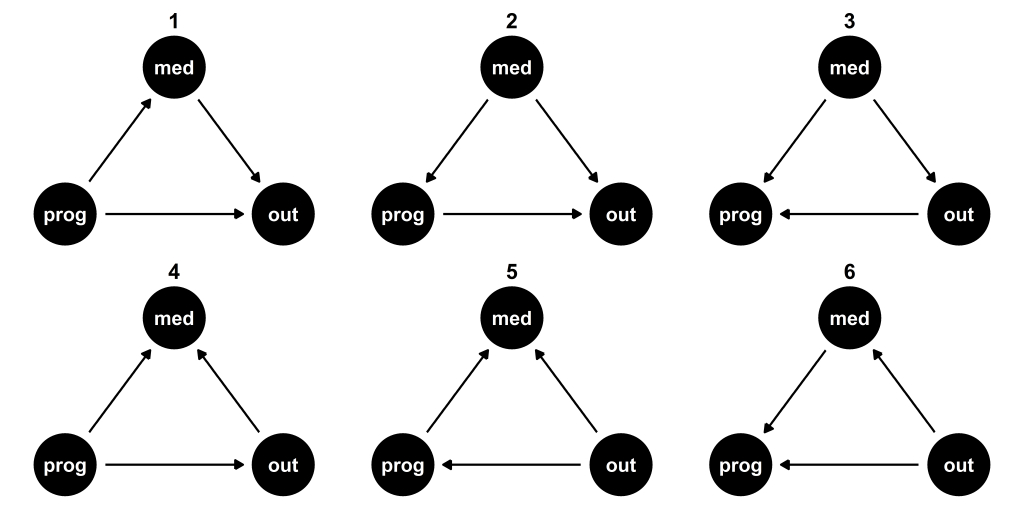
Additionally, a large number of causal models will be consistent with the data, so you need a theory to choose between them. For example, given only data, the following six simple causal models are statistically equivalent. Each model has three variables: outcome (out); condition, e.g., the programme being evaluated or usual practice (prog); and mediator (med).
Model 1 is the intended causal interpretation: the effect of the programme is partially explained by the mediator. Model 2, for example, says that programme and outcome are statistically associated with each other because the supposed mediator is actually a common cause.
The Magenta Book recommends using theory-based evaluation if you can’t find a comparison group (HM Treasury, 2020, p. 47). Annex A (analytical methods for use within an evaluation) locates trials and quasi-experiments outside the theory-based list. I think the Magenta Book is partly responsible for perpetuating Myth 5 in the UK – particularly through invitations to tender that follow the book, which leave evaluators having to play a semantic game to win work. I hope the upcoming revision corrects this (update: it doesn’t), and that it becomes routine practice to commission theory-based trials, quasi-experiments, and mixed methods evaluations, alongside theory-based qualitative impact evaluations and small-n case studies.
6. Theories of change are a kind of diagram
Theories of change are theories – of change. They may be illustrated using a diagram, but there needs to be an explanation, usually using prose, describing how the resources, entities (e.g., people, organisations, laws, etc.), and activities carried out lead to outputs and outcomes. Currently entrenched practices of developing a Theory of Change™ seem to lead people to forget what they learned about theory and theorising at university.
Pawson and Tilley (1997, p. 134) provide neat examples of how to organise theories of change explanations in tables. Tables like these are part of the “realist evaluation” tradition; however, the logic is clearly much more general (see Myth 4):
Context
Mechanism
Outcome
High numbers of prepayment meters, with a high proportion of burglaries involving cash from meters
Removal of cash meters reduces incentive to burgle by decreasing actual or perceived rewards
Reduction in percentage of burglaries involving meter breakage; reduced risk of burglary at dwellings where meters are removed; reduced burglary rate overall
If a client forces you to include only a diagram in a report, plead with them to let you add the actual theory to an Appendix. We’ve been in this situation many times and used this solution once to date – let’s see if the report is published (update: it wasn’t).
7. Evaluations test “treatments”
Well, in a formally defined sense they do; however, not as people usually use the term. We’re not administering drugs – we’re evaluating, e.g., mentoring, approaches to teaching, emotional support. The term “treatment” carries with it medical baggage, which is very different to social programmes. My preference would be to use names that are as close as possible to the conditions. For instance, if we were evaluating ACME Therapy, the conditions would be something like ACME Therapy and usual practice or ACME Therapy and CBT.
The same goes for terms like contamination and dosage. Contamination is usually invoked when making the case for cluster randomisation, referring to the risk that individuals in the control group receive elements of the programme being evaluated too, e.g., students telling each other what they learned working with a mentor. Calling it “contamination” implies something toxic or infectious. A better term may be spillover, diffusion, or cross-group knowledge sharing.
Dosage is typically used to describe how much of a programme someone engages with, e.g., the number of sessions attended or hours of support. People aren’t absorbing a dose, they’re participating, doing activities that are suggested, sharing how they feel with a practitioner. Terms like engagement level, participation intensity, or simply sessions attended might better reflect what’s actually going on.
Using medical language in the context of trials in schools or criminal justice sounds especially creepy – it reminds me of A Clockwork Orange. I have been guilty of using these terms too. Sometimes it’s just too difficult to challenge medicalised tradition when there are pressing deadlines, and causal estimands like average treatment effect on the treated are pervasive in the methods literature (e.g., Cunningham, 2021, Section 4.1.2).
Cook, T. D. (2000). The false choice between theory-based evaluation and experimentation. In A. Petrosino, P. J. Rogers, T. A. Huebner, & T. A. Hacsi (Eds.), New directions in evaluation: Program Theory in Evaluation: Challenges and Opportunities (pp. 27–34). Jossey-Bass.
Fitz-Gibbon, C. T., & Morris, L. L. (1975). Theory-based evaluation. Evaluation Comment, 5(1), 1–4. Reprinted in Fitz-Gibbon, C. T., & Morris, L. L. (1996). Theory-based evaluation. Evaluation Practice, 17(2), 177–184.
“A starting point for the QuIP [Qualitative Impact Protocol] is the premise that those who were intended to benefit from an intervention know a great deal about what has caused and affected changes in their (and their households’) lives in the recent past, and what has influenced their active decisions to start or stop doing certain activities. Relying on the narrative testimonies of intended beneficiaries removes the need for an independent counterfactual based on interviews with a control or comparison group. This is because comparisons between what happened and what would have happened otherwise are embedded in causal claims within the narrative – our thinking and language is laden with ways of doing this (e.g. through use of the conditional tense and the many ways we can answer ‘why’ questions). Collected with care, narrative accounts are full of explicit and latent counterfactuals; the task is to identify and interpret them. […] We refer to reliance on respondents to provide evidence of the causal chain puzzle themselves as self-reported attribution, and we distinguish it from statistically inferred attribution that generally relies on exposure variation, including comparing treatment and control groups.” (Copestake, Morsink, & Remnant, 2019, pp. 7–8.)
Copestake, J., Morsink, M., & Remnant, F. (2019). Attributing Development Impact. Practical Action Publishing Ltd. https://doi.org/10.3362/9781780447469
Theory-based evaluation – a possible Venn, with a long and often-forgotten history.
Example readings
Cook, T. D. (2000). The false choice between theory-based evaluation and experimentation. In A. Petrosino, P. J. Rogers, T. A. Huebner, & T. A. Hacsi (Eds.), New directions in evaluation: Program Theory in Evaluation: Challenges and Opportunities (pp. 27–34). Jossey-Bass.
Fitz-Gibbon, C. T., & Morris, L. L. (1975). Theory-based evaluation. Evaluation Comment, 5(1), 1–4. Reprinted in Fitz-Gibbon, C. T., & Morris, L. L. (1996). Theory-based evaluation. Evaluation Practice, 17(2), 177–184.