Basil – one of the real heroes of The Night Manager

Adam: Tell me, how did you get involved in this sort of thing?

Basil: Oh. Right. University.

Adam: Yeah?

Basil: Recruited by a handsome tutor. Oh, God.

Adam: Did you not think twice, no?

Basil: Not for a second. My therapist would say – if I hadn’t told her I was a dentist – that I am the product of an immigrant family, cursed with a compulsion to impress the natives.

Adam: [laughs] Cheers to that.
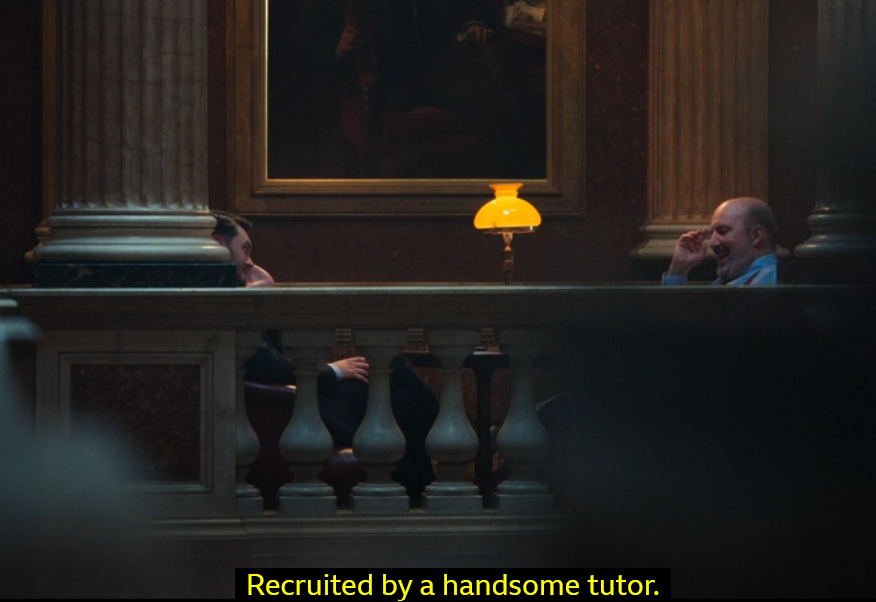
(The Night Manager, Series 2, Episode 4, 18:12.)

Hilda Weiss

If you have read about critical theory and the Frankfurt School, you probably think of names like Horkheimer, Adorno, Habermas, and Fromm. You might also be interested in Hilda Weiss (1900-1981), a forgotten and important member of the School.

Weiss directed a novel mixed methods survey of workers’ conditions in Germany around 1930, which had 3,300 participants. The questions were probably influenced by a questionnaire developed by Karl Marx in 1880 (bet you didn’t know he ran a survey!), which she uncovered while working in an archive.

I kept seeing her name mentioned in footnotes, including one asking readers if they knew her whereabouts – rather unusual in academic papers. I wrote her Wikipedia page.

David Smith (2020, p. 138) summarises her contribution:

Hilde Weiss is one of the truly neglected figures in the history of the Frankfurt School. But that neglect is inversely proportional to her importance. Weiss was in many ways the principal architect of the workers’ survey, which built on work she had already completed in industrial sociology and laid the foundation for research she would later conduct on Marx and the history of working-class surveys and families. Politically, Weiss was among the most active and astute members of the Institute, and she was better educated in Marxian theory, sociology, and labor studies than Fromm, Horkheimer, or Adorno. She was intimately familiar with trade unions and she had direct, disillusioning experiences of both left-wing and right-wing authoritarianism.

See also Nancy Fraser’s definition of critical theory and other posts on Hilda Weiss.

References

Smith, D. (2020). Anti-authoritarian Marxism: Erich Fromm, Hilde Weiss, and the Politics of Radical Humanism. In K. Durkin & J. Braune (Eds), Erich Fromm’s critical theory: Hope, humanism, and the future (pp. 131–165). Bloomsbury Academic.

Theory-ladenness

An interesting paper on theory-ladenness in research on black holes (Doboszewski & Elder, 2025). Relevant to debates in policy evaluation on theory-based evaluation too and the pervasive role of theory whether or not you name the TBE brand.

‘Philosophers have raised a range of worries about the ways in which observations are theory-laden. In this article, we are focusing on the theory-ladenness of measurement outcomes—the ways in which the “observations” derived from an experiment or measurement are affected by theoretical assumptions that are made in the course of the experiment. The greatest concern is that theory-ladenness may lead to a vicious circularity where the theoretical assumptions made by the experimenters—either in the physical design of the experiment or in subsequent inferences from the empirical data—make it more likely or even guarantee that the observation will confirm the theory being tested. This might occur if the hypothesis being tested is presupposed by the experimental methods being used. Franklin (2015, 156) provides the following toy example of this: if we use a mercury thermometer to test a hypothesis that substances expand as their temperature increases, this is theory-laden in a way that risks vicious circularity because the proper functioning of a mercury thermometer relies on the very hypothesis being tested.’ (pp. 829-830)

‘… the impossibility of controlled experiments on astrophysical targets (stars, galaxies, etc.) places constraints on how astronomers can investigate these systems. Simulations can help make up for the lack of controlled interventions by providing a proxy system into which one can intervene.’ (p. 830)

Doboszewski, J., & Elder, J. (2025). How Theory-Laden Are Observations of Black Holes? Philosophy of Science, 92(4), 827–849.

Preprint here.

Levers

“Change doesn’t happen in straight lines and is propagated (or not) by human actors with their own preferences and motivations. Delivery is disaggregated between departments, tiers of government, sectors, agencies, regulators and professions. The economy is not a thing but an aggregation of billions of decisions, each made on the basis of incentives, opportunities and desires. Citizens’ choices and relationships control far more of what happens in our country than any Prime Minister could ever dream. Culture eats levers for breakfast.”

– Polly Mackenzie (2025, 19 Dec). There aren’t any levers.

2026

Got a new sequence in the On‑Line Encyclopedia of Integer Sequences: A392249, numbers k such that k-1 is a perfect square and k+1 is prime. It’s a subset of A163492, numbers for which the two adjacent integers are a perfect square and a prime, which doesn’t constrain the order.

Here are the first terms: 1, 2, 10, 82, 226, 442, 1090, 1522, 2026, 3250, 6562, 9802, 11026, 12322, 13690, 15130, 21610, 29242, 47962, 50626, 56170, 59050, 62002, 65026, 74530, 88210, 91810, 95482, 103042, 119026, 123202, 131770, 136162, 140626, 149770, 173890, 178930, 184042, 194482, …