Blog 🎤
“QCA exists in a nether region between qualitative and quantitative research”
‘Highlighting QCA’s reliance on two-element Boolean algebra and propositional logic brings the weaknesses of QCA into sharp relief. The distinction between QCA and conventional statistics is not a difference between “set-theoretic” methods and what QCA researchers call “non-set-theoretic” methods (Schneider and Wagemann 2012) […]. Conventional statistics are set-theoretic methods. […] What truly sets QCA apart from conventional statistics is the former’s embrace of the limitations of two-element Boolean algebra and propositional logic. QCA exists in a nether region between qualitative and quantitative research; it exhibits neither the depth of small-n qualitative research nor the power of quantitative research.’ (Clarke 2020, p. 553)
Clarke, K. A. (2020). Logical Constraints: The Limitations of QCA in Social Science Research. Political Analysis, 28(4), 552–568.
Gender is a construct, society is a construct, money is a construct. But…

Will McPhail [@realmikejfox] (2019, October 20). “Listen to me. Gender is a construct, society is a construct, money is a construct. But bedtime is very, very real.” [Instagram photo]. Retrieved from instagram.com/p/B32EjQKD7UT/
Four weddings

I recently rewatched Four Weddings and a Funeral (1994). It’s still a great film, ageing better than, for instance, the more recent Love Actually (2003). (Keira Knightley has commented on the creepiness of the infamous cue card scene of the latter.)
I had forgotten Matthew’s deeply moving speech at his partner Gareth’s funeral, and how the priest introduced Matthew as “Gareth’s closest friend”.
In the (original?) script, the priest introduces him simply as “Matthew” – no “partner” but also no “closest friend” euphemism.
The camera directions note: “Cut aways during the poem should include Gareth’s parents – it would be nice to feel they understand Matthew.”
Matthew mentions in his speech that “Gareth used to prefer funerals to weddings. He said it was easier to get enthusiastic about a ceremony one had an outside chance of eventually being involved in.”
There’s a lot going on. Four straight weddings and a gay funeral.
Same-sex marriage has been legal in Britain since 2014 – 20 years after Four Weddings! – and in Northern Ireland only since January 2020. I wonder in twenty years how we will look back at the discrimination against trans and nonbinary people that’s interwowen with society.
Matthew’s speech concludes with a poem, Funeral Blues: “As for me, you may ask how I will remember him, what I thought of him. Unfortunately, there I run out of words. Perhaps you will forgive me if I turn for my own feelings to the words of another splendid bugger, W. H. Auden. This is actually what I want to say.”
Stop all the clocks, cut off the telephone,
Prevent the dog from barking with a juicy bone,
Silence the pianos and with muffled drum
Bring out the coffin, let the mourners come.
Let aeroplanes circle moaning overhead
Scribbling on the sky the message ‘He is Dead’.
Put crepe bows round the white necks of the public doves,
Let the traffic policemen wear black cotton gloves.
He was my North, my South, my East and West,
My working week and my Sunday rest,
My noon, my midnight, my talk, my song;
I thought that love would last forever: I was wrong.
The stars are not wanted now; put out every one,
Pack up the moon and dismantle the sun,
Pour away the ocean and sweep up the wood;
For nothing now can ever come to any good.
CORELS (Certifiable Optimal RulE ListS)
“CORELS (Certifiable Optimal RulE ListS) is a custom discrete optimization technique for building rule lists over a categorical feature space. Our algorithm provides the optimal solution, with a certificate of optimality. By leveraging algorithmic bounds, efficient data structures, and computational reuse, we achieve several orders of magnitude speedup in time and a massive reduction of memory consumption. Our approach produces optimal rule lists on practical problems in seconds. This framework is a novel alternative to CART and other decision tree methods.”
De-donut
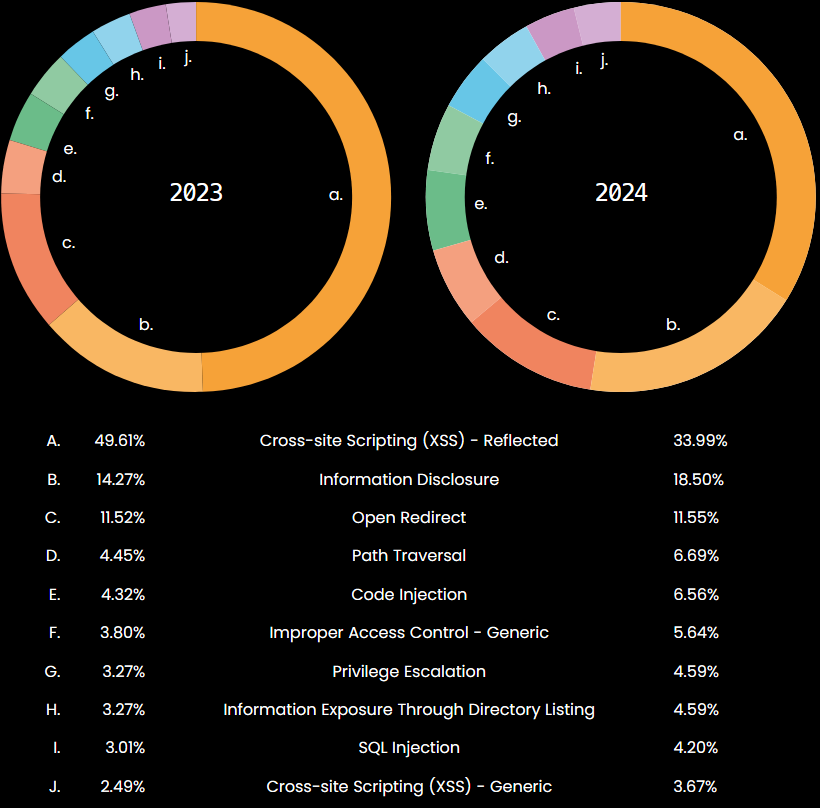
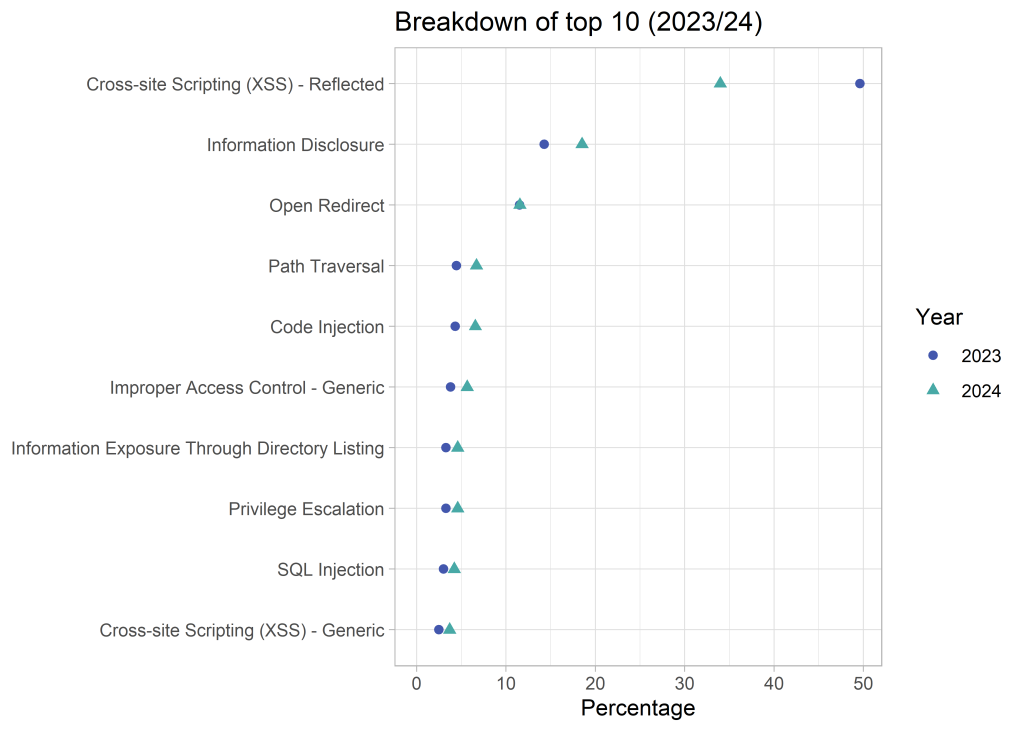
Abstract or systemic
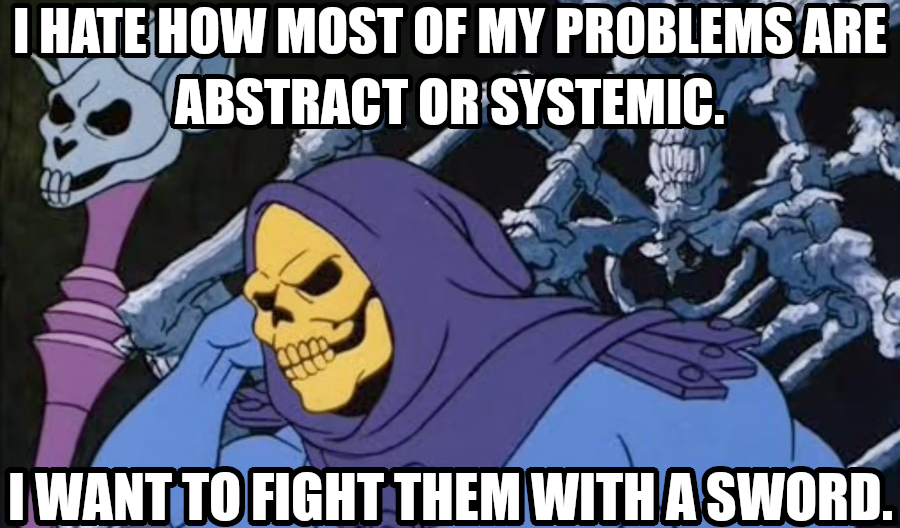
Post by @skeletor@mas.to
How to Interpret Statistical Models Using {marginaleffects} for R and Python
New paper:
Arel-Bundock, V., Greifer, N., & Heiss, A. (2024). How to Interpret Statistical Models Using marginaleffects for R and Python. Journal of Statistical Software, 111(9), 1–32.
Abstract:
“The parameters of a statistical model can sometimes be difficult to interpret substantively, especially when that model includes nonlinear components, interactions, or transformations. Analysts who fit such complex models often seek to transform raw parameter estimates into quantities that are easier for domain experts and stakeholders to understand. This article presents a simple conceptual framework to describe a vast array of such quantities of interest, which are reported under imprecise and inconsistent terminology across disciplines: predictions, marginal predictions, marginal means, marginal effects, conditional effects, slopes, contrasts, risk ratios, etc. We introduce marginaleffects, a package for R and Python which offers a simple and powerful interface to compute all of those quantities, and to conduct (non-)linear hypothesis and equivalence tests on them. marginaleffects is lightweight; extensible; it works well in combination with other R and Python packages; and it supports over 100 classes of models, including linear, generalized linear, generalized additive, mixed effects, Bayesian, and several machine learning models.”
The causal inference task view on CRAN
“Causal inference can be seen as a subfield of statistical analysis. It is used in various fields such as econometrics, epidemiology, educational sciences, etc. With causal inference one addresses questions about effects of a treatment, intervention, or policy on some target over a given sample or population. Under certain identifiability and model assumptions, causal inference can be carried out by fitting simple regression models or combining several regression models in a specific way as will be sketched out later. For observational data, additional untestable assumptions have to be made to (non-parametrically) identify causal effects.”
The CRAN task view is over here.
Dodo bird verdicts
The Dodo bird verdict asserts that all effective psychological therapies are equally effective and work because of shared “common factors”. It is heavily debated.
Another Dodo bird verdict could also be said to apply to evaluation methods. I don’t believe that all methods are equally good; however, some do, and it might be handy to have a name for the position.
Here’s the section of Alice’s Adventures in Wonderland that inspired the term:
“What I was going to say,” said the Dodo in an offended tone, “was, that the best thing to get us dry would be a Caucus-race.”
“What is a Caucus-race?” said Alice; not that she wanted much to know, but the Dodo had paused as if it thought that somebody ought to speak, and no one else seemed inclined to say anything.
“Why,” said the Dodo, “the best way to explain it is to do it.” (And, as you might like to try the thing yourself, some winter day, I will tell you how the Dodo managed it.)
First it marked out a race-course, in a sort of circle, (“the exact shape doesn’t matter,” it said,) and then all the party were placed along the course, here and there. There was no “One, two, three, and away,” but they began running when they liked, and left off when they liked, so that it was not easy to know when the race was over. However, when they had been running half an hour or so, and were quite dry again, the Dodo suddenly called out “The race is over!” and they all crowded round it, panting, and asking, “But who has won?”
This question the Dodo could not answer without a great deal of thought, and it sat for a long time with one finger pressed upon its forehead (the position in which you usually see Shakespeare, in the pictures of him), while the rest waited in silence. At last the Dodo said, “Everybody has won, and all must have prizes.”